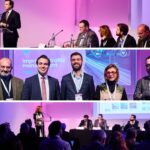
At this year’s POLIS Conference, the SUM Project brought forward some of the most concrete lessons from its Living Labs, showing how shared mobility pilots evolve from promising concepts into real, functioning services. The discussions offered a grounded view of what cities need, what users expect, and what it truly takes to bring innovative mobility solutions beyond the prototype stage.
Kraków: Scaling demand through user-Centred Design
Kraków attracted significant attention with the strong uptake of its Lajkbus service, now used by more than 1,000 people each week. Behind this success lies a design process shaped by continuous citizen input, allowing the city to refine routing, improve algorithms and adapt the service as real-world demand became clearer.
Technology choices proved equally decisive: the selection of a reliable provider ensured stable performance, effective data flows and the flexibility to adjust the service over time. All data generated by ZF is shared openly with the city, strengthening transparency and collaboration.
Kraków’s experience underscored a broader lesson for European cities: successful deployments depend on robust technology, open data structures and a readiness to learn directly from user behaviour.

Rotterdam: Certainty, reliability and the role of policy
Rotterdam offered a different perspective, focusing its pilot on a single, strategically selected station. This targeted approach improved operational efficiency and made the service easier to understand and use. The city’s longstanding commitment to new and shared mobility, backed by clear policy support, created the stability needed for the pilot to flourish.
For many users, particularly women relying on shared mobility for first- and last-mile connections, predictability emerged as a defining feature. Yet challenges remain. Commercial integration into MaaS platforms continues to be complex, with uncertainties around pricing models and the distribution of benefits among local businesses, residents and the city itself.
Rotterdam reminded participants that while technology can be integrated, trust and reliability ultimately determine whether people choose shared mobility.
Expert View: Context matters — and people do too
TU Delft’s partner Shadi Sharif Azadeh highlighted a point that resonated throughout the session: mobility solutions cannot be copied from one city to another. What succeeds in Berlin may not suit Rotterdam — or Kraków — because local context shapes travel patterns, expectations and operational realities.
She also noted that the SUM pilots achieved a rare progression from early research stages to fully operational levels (TRL 2 to TRL 9). This was made possible not only by sound technology, but by strong cooperation among partners and a collective commitment to refining the service at every step.
Why these findings matter
The SUM Living Labs demonstrate that the future of shared mobility relies on much more than new vehicles or sophisticated algorithms. Real transformation happens when cities lead with vision, operators share data transparently, and services are adapted to local conditions. Above all, shared mobility works when it is predictable, safe and easy to use.
As more European cities look to integrate shared mobility into their wider transport systems, the experiences from Kraków and Rotterdam provide a clear message: the most successful solutions are those built around people, context and genuine collaboration.