
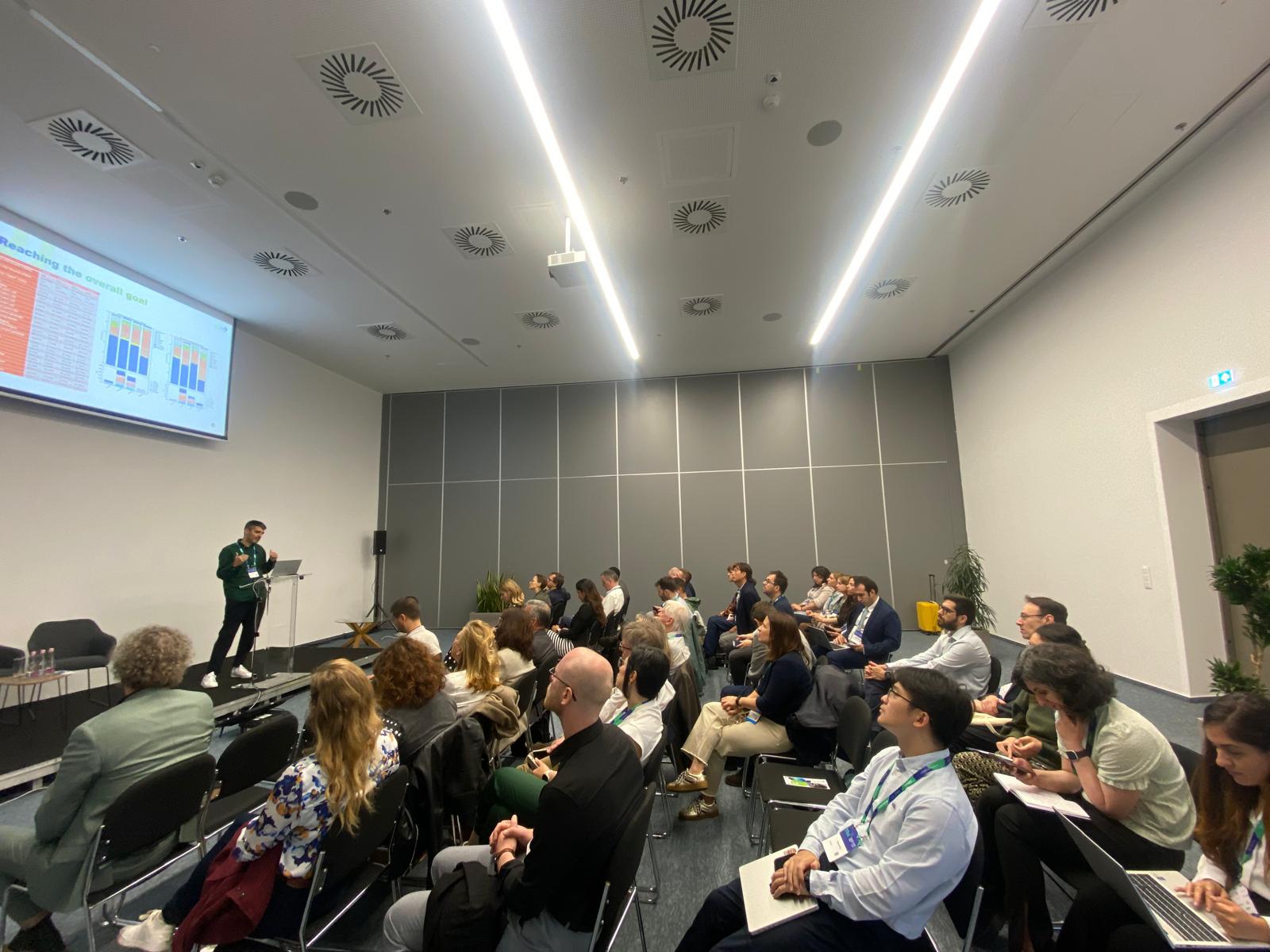
More than 80 participants gathered in Budapest during the Transport Research Arena 2026 for the final event of SUM, celebrating three years of work advancing seamless shared urban mobility across Europe and beyond.
Bringing together cities, researchers, mobility operators, industry representatives and policymakers, the event reflected on SUM achievements while exploring how shared mobility solutions can move beyond isolated pilots and become integrated, long-term components of urban transport systems. As the project approaches its conclusion, discussions focused on how European cities can scale sustainable, citizen-centred mobility services through stronger governance, interoperability, open data and multimodal integration.
From pilots to scalable urban mobility solutions
A recurring message throughout the event was that urban mobility transformation requires much more than technological innovation alone. Speakers stressed that successful implementation depends on combining digital tools and mobility services with political commitment, long-term operational planning, inclusive governance and behavioural change strategies. SUM’s work over the past three years demonstrated that shared mobility services are most effective when embedded into wider multimodal ecosystems and closely connected to public transport systems and urban planning frameworks such as Sustainable Urban Mobility Plans (SUMPs).
Across the nine SUM Living Labs, a broad range of interventions was tested including demand-responsive transport (DRT), mobility hubs, Mobility as a Service (MaaS), integrated ticketing systems, predictive fleet availability tools, bike-sharing schemes and multimodal journey planning solutions. These interventions were not approached as standalone technologies, but as instruments to support broader policy objectives such as improving accessibility, reducing greenhouse gas emissions, enhancing multimodality, strengthening public transport and reducing car dependency.
Living Labs share implementation experiences
Several Living Labs shared practical insights from implementation on the ground. In Athens and Penteli, partners explored the reallocation of street space, deployment of e-bike sharing schemes, mobility hubs and MaaS solutions as part of a broader strategy to create more liveable and people-centred urban environments. The experience highlighted both the opportunities and limitations of digital mobility platforms when broader supportive conditions, such as urban design, accessibility and behavioural incentives, are not fully aligned.
In Munich, the Living Lab demonstrated how hybrid car-sharing systems combining free-floating and station-based models can improve flexibility and geographic coverage while supporting integration with public transport. The city also showcased the deployment of mobility hubs, the repurposing of public parking spaces and simulation tools developed to better understand user behaviour and operational efficiency.
The experience of Kraków illustrated how demand-responsive transport can complement conventional public transport networks rather than compete with them. Since February 2025, the LajkBus service has recorded more than 50,000 passengers and over 41,000 bookings while significantly improving accessibility to public transport in underserved areas. The pilot also revealed the operational complexity of DRT systems, particularly the importance of real-time monitoring, scalable dispatch systems and continuous optimisation to respond to fluctuating demand patterns.
Meanwhile, Coimbra presented lessons learned from deploying flexible passenger transport services in peripheral and lower-density areas. The Living Lab underlined the importance of balancing inclusion objectives with operational realities. While the service incorporated accessibility measures such as call-centre booking support for elderly or digitally excluded users, operational disruptions and resource constraints demonstrated how reliability remains critical for long-term adoption and public trust.
Additional Living Labs showcased complementary innovations and implementation strategies. Geneva demonstrated the deployment of a growing network of mobility hubs supported by multiple shared mobility operators and extensive co-creation processes with users and municipalities. Jerusalem highlighted the integration of cycling infrastructure and bike-sharing services with the city’s expanding light rail network, reinforcing the importance of locating mobility hubs near high-capacity public transport corridors. Rotterdam presented its predictive fleet availability API integrated into the RET MaaS application, enabling users to anticipate the availability of shared mobility vehicles in real time. Larnaca demonstrated how integrated ticketing and bike-sharing measures contributed to increases in both cycling and public transport use, while Fredrikstad shared progress on its autonomous electric ferry pilot aimed at reducing regional car traffic.
Policy recommendations and long-term legacy
The event also placed strong emphasis on policy and governance recommendations developed throughout the project. Presented by POLIS Network, the recommendations were built upon the experiences of the nine Living Labs and validated through exchanges with cities, mobility stakeholders and sister European projects. The recommendations focus on strengthening data-driven governance, ensuring interoperability between mobility systems, improving inclusive access to mobility services and developing sustainable operational and financial frameworks for shared mobility deployment. A key conclusion was that cities must avoid treating shared mobility as an isolated innovation and instead integrate it strategically into wider transport, spatial planning and climate policies.
One of the most significant long-term outcomes highlighted during the final event was the SUM Open Data Platform, which will remain available beyond the project lifetime. The platform enables cities, researchers and mobility practitioners to access open KPIs, intervention monitoring tools, comparative city profiles and analytical insights generated through the nine Living Labs. Together with additional datasets published through Zenodo, the platform is expected to support future replication, evidence-based policymaking and continued research on sustainable shared mobility across Europe.
Collaboration as the foundation for future mobility
The event concluded with a strong consensus that collaboration remains essential for the future of sustainable urban mobility. Participants emphasised that meaningful transformation will depend on continued cooperation between cities, mobility providers, researchers, policymakers and local communities, alongside long-term commitments to open data, governance innovation and citizen engagement.
As highlighted during the closing session: “The project closes. The results stay.”

