SUM has officially launched its Open Data Platform (ODP), a new pan-European tool designed to help cities understand what actually happens when New Shared Mobility services are combined with public transport and supported by policy measures.
Cities across Europe are experimenting with shared bikes, e-scooters, car-sharing, demand-responsive transport and MaaS solutions. At the same time, they are introducing push measures such as parking restrictions or congestion charging, and pull measures like mobility hubs or integrated ticketing. What has often been missing is a clear, structured way to monitor these interventions over time and compare results across cities. The SUM Open Data Platform has been developed to fill this gap.
The platform brings together data from Living Labs across Europe and applies a shared monitoring methodology to track how mobility systems evolve before, during and after the implementation of New Shared Mobility measures. Rather than focusing on individual pilots in isolation, the ODP allows cities to situate their actions within a wider European picture and to learn from comparable experiences elsewhere.
One platform, one methodology, multiple cities
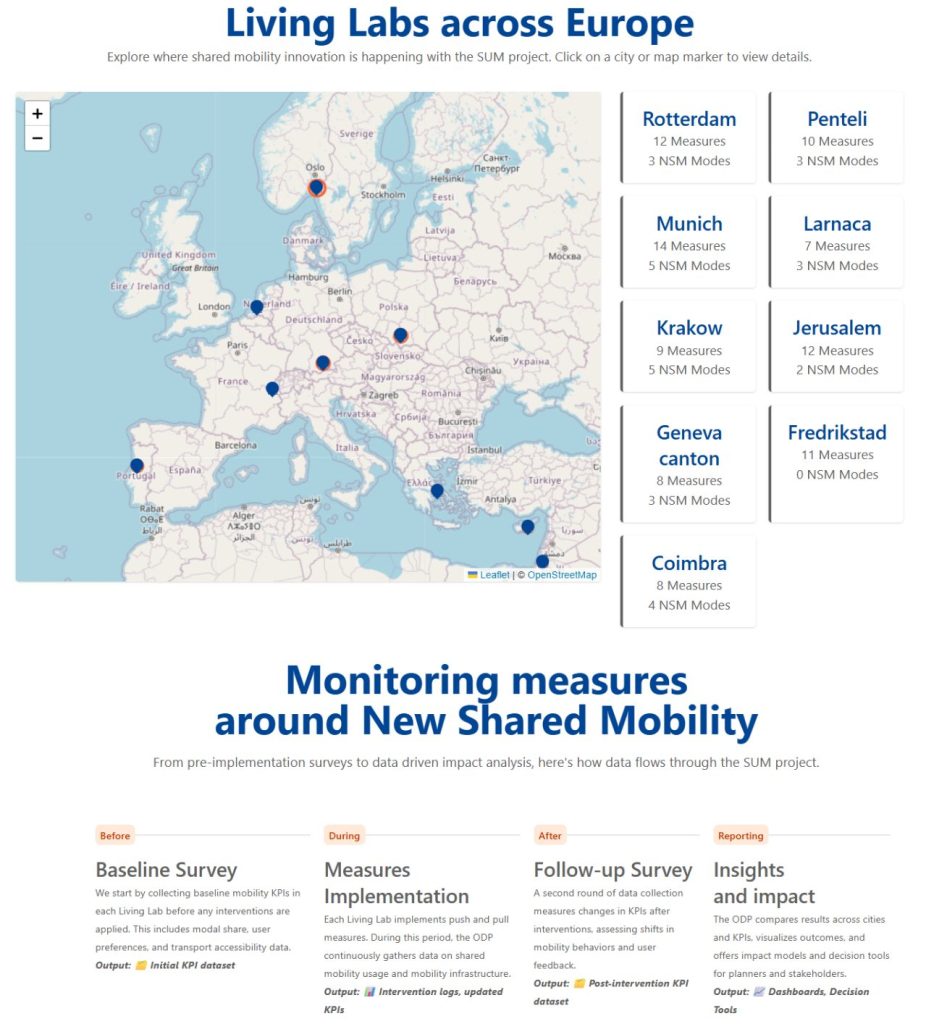
Through the Open Data Platform, users can explore all SUM Living Labs and access a comprehensive set of information for each city. This includes the shared mobility services available, the push and pull measures implemented, and a wide range of mobility indicators collected using the same framework everywhere.
Each Living Lab follows a common monitoring cycle. Baseline surveys establish how people move before any intervention takes place. During implementation, measures and services are documented in the platform as they are rolled out. Follow-up surveys then capture how mobility behaviour, user perceptions and system performance change over time. The result is a transparent, comparable dataset that shows not just what cities are doing, but how those actions are shaping mobility outcomes.
Living Lab dashboards allow users to explore modal split from different perspectives, assess indicators related to travel time, safety, affordability and satisfaction, and see how measures progress over time. This makes the platform a practical resource for planners, policymakers and researchers looking for evidence rather than assumptions.
Open to cities beyond the SUM project
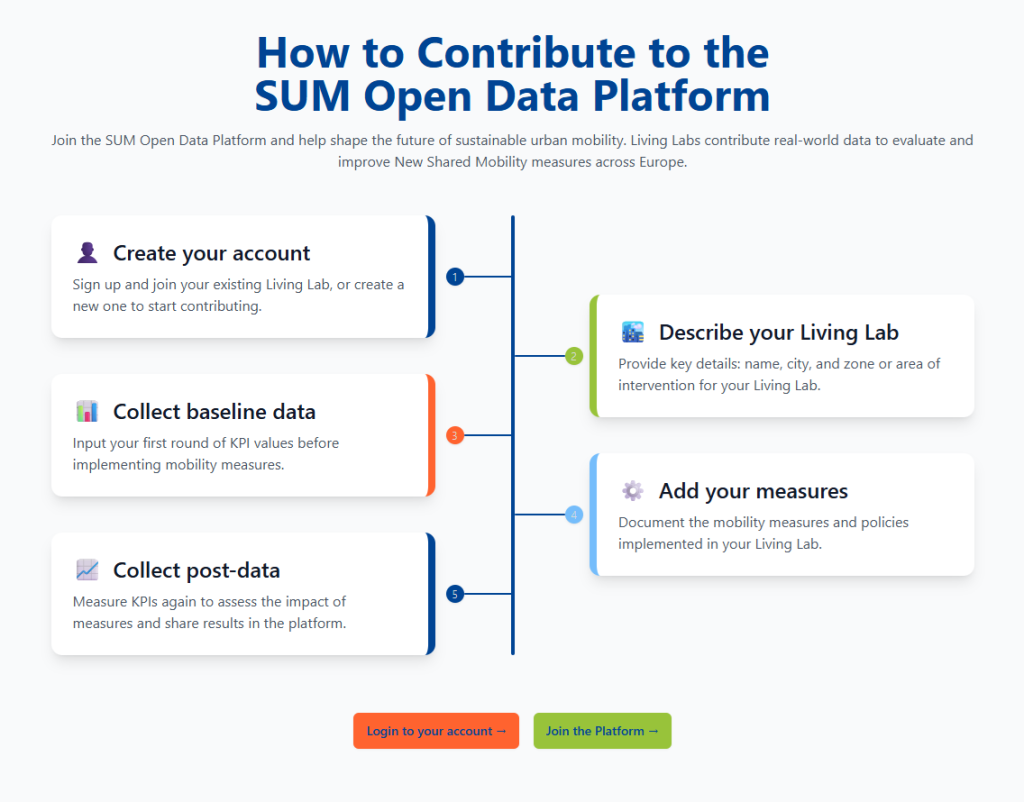
While the platform already hosts data from SUM Living Labs, it has been designed to grow beyond the project. Other cities interested in assessing shared mobility and public transport integration can join the platform and apply the same methodology in their own context.
By contributing data and documenting measures, cities become part of a growing European evidence base on New Shared Urban Mobility. In return, they gain access to comparable results, emerging insights and, in the coming months, new analytical and decision-support tools that will further support evidence-based mobility planning.
With the launch of the Open Data Platform, SUM takes a concrete step towards making shared mobility policies measurable, comparable and transferable — supporting cities not just to act, but to understand the impact of their actions.